
Living Under the OR Tambo Flight Path: What Actually Affects Your DStv Signal
Kempton Park lives with OR Tambo in a way no other town on the East Rand quite does. Aircraft cross low over the suburbs all day, the noise is part of the background, and when the television drops out mid-programme the aeroplane overhead is the obvious thing to blame. It is the single most common theory we hear in this town.
It is also, almost always, the wrong one. This is a short guide to what genuinely interferes with a satellite picture and what does not, written so you can rule the sky out and start looking at the things that actually break.
Where Your Dish Is Actually Pointing
Start with the geometry, because it settles most of the argument on its own.
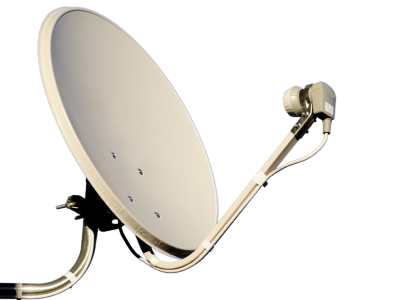
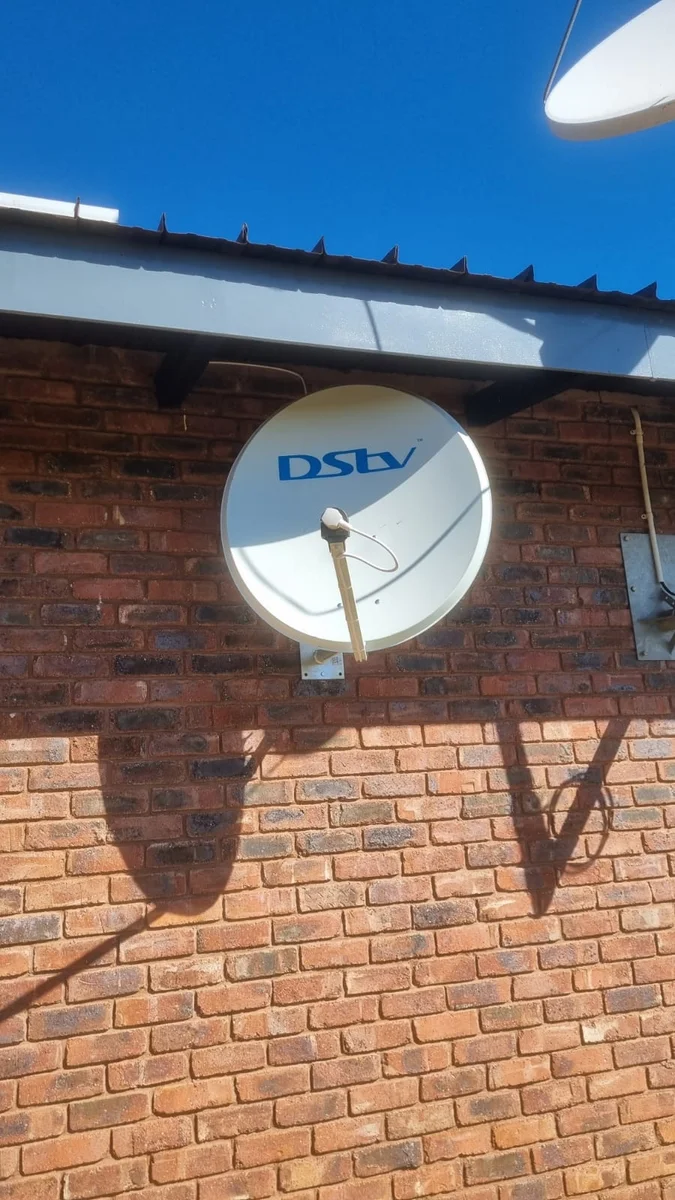
DStv's signal comes from a satellite sitting over the equator at 68.5 degrees east. From Kempton Park that puts the dish on a bearing of roughly 62.5 degrees — north-east — tilted about 36 degrees up from horizontal, with the LNB rotated around 53 degrees. Those are the numbers an installer sets, and they are worth knowing for one reason: the dish is looking north-east and upward, at a fixed point in the sky.
OR Tambo lies to the south of the Kempton Park suburbs. From the CBD, from Glen Marais, from Birchleigh, from Norkem Park, from the holdings out at Pomona and Bredell, the airport sits somewhere between south and south-west of you. Your dish, meanwhile, is aimed north-east. In other words, on the great majority of properties in this town the dish is pointed away from the airport, roughly a hundred degrees off it.
One correction worth making while we are here, because it gets repeated locally: those figures are not a Kempton Park number. They are within a fraction of a degree of the figures for Benoni, Boksburg, Germiston and Randburg. Anyone who tells you your suburb needs its own special alignment is selling you something. The whole East Rand points at the same satellite in the same direction.
What DStv Itself Lists as the Causes
When a decoder cannot see the satellite it shows E48. DStv's own description of that code is specific about why it happens: "This error indicates that your decoder isn't receiving an adequate signal from the satellite dish. Possible reasons include damaged cables, loose connections, an improperly aligned dish, or severe weather conditions."
Four causes: cable damage, loose connections, alignment, weather. Aircraft are not on that list, and we are not going to invent a claim in either direction about them — we have no measurement of our own to offer and we are not going to pretend otherwise. What we can tell you is what a decade of call-outs looks like in practice: when a Kempton Park household loses the picture, the fault is on that list of four with almost monotonous reliability, and the aeroplane was a coincidence of timing.
There is a good reason the coincidence feels convincing. Aircraft cross overhead constantly here. If your signal is marginal and drops out several times an evening, an aeroplane will happen to be passing during some of those dropouts. The plane is the thing you notice; the marginal signal is the thing you do not.
What Actually Does Affect Reception
Weather, which is real
This one is genuine and DStv says so. Its page for the E48-32 code puts it directly: "the rain can interrupt your DStv signal", and advises that if the weather is fine you should instead check that the cables from the dish are properly connected to the decoder. A heavy Highveld downpour between your dish and the satellite can thin the signal until it passes. That is normal and it comes back.
What is not normal is losing the picture in light drizzle. A properly aligned dish with a healthy LNB carries enough margin to ride out ordinary rain. If a passing shower is all it takes, the system was running on almost no margin before the rain arrived — which is an alignment or equipment problem wearing a weather costume.
Things that permanently block the line of sight
A dish needs an uninterrupted view of one patch of sky, to the north-east and about 36 degrees up. Anything permanently parked in that path matters: a tree that has grown, a neighbour's new double storey, a carport, a Jojo tank on a stand, a wall extension. This is the failure that arrives slowly — the picture degrades over a season or two rather than dying overnight — and it is the one worth walking outside to check. Stand behind the dish, sight along the direction it faces, and look up.
The cable and the connectors
Most faults we attend are down here rather than up there. Coax that has baked in the sun for years goes brittle and cracks. An outdoor connector that was never properly sealed lets in water, corrodes, and starts failing intermittently — worse after rain, better in dry weather, which is exactly the pattern that gets blamed on the weather or on aircraft. A cable pinched behind a moved cupboard does the same thing.
The dish having physically moved
Dishes shift. A bracket bolt works loose, a gutter is replaced, someone leans a ladder against the arm, a bad wind gets under it. A few degrees is enough to lose the picture entirely, which is why realignment is done with a meter rather than by eye.
How to Tell Them Apart in Five Minutes
The pattern of the fault tells you more than the fault itself:
- Gone completely, and stayed gone. Not weather, not aircraft. Cable, connector, LNB or alignment.
- Drops out in heavy rain, returns when it clears. Normal — unless it is happening in light rain too, in which case the margin is too thin.
- Brief dropouts several times an evening, no weather. Usually a failing LNB or a corroded connector. This is the one blamed on aeroplanes.
- Slowly worse over months. Something has grown or been built into the line of sight.
- Died during a thunderstorm and never came back. Suspect lightning damage to the LNB or the decoder, not alignment.
Before calling anyone, do the one thing DStv suggests first for E48: check the cable is screwed firmly onto the decoder, then "switch off the decoder at the wall plug and wait for at least 10 seconds before turning it back on". It clears more faults than it has any right to.
If it does not, a meter at the dish is the only thing that settles the question properly. Our dish alignment and signal checks cover exactly that, our fault-finding guide works through more symptoms, and you can reach us through the Kempton Park DStv installers home page.
Frequently Asked Questions
Do aeroplanes from OR Tambo interfere with my DStv signal?
We cannot make a measured claim either way, and we would rather say that than guess. What we can tell you is that DStv's own list of causes for the E48 signal error names damaged cables, loose connections, an improperly aligned dish and severe weather — and that from every Kempton Park suburb the dish points north-east while the airport lies to the south, so it is not aimed anywhere near the flight path. In practice, persistent dropouts here turn out to be cable, connector, LNB or alignment faults.
Why does my picture only break up in the evening?
Evening dropouts with no weather usually point at a failing LNB or a corroded outdoor connector rather than anything in the sky. Both tend to worsen as components cool or as moisture settles, and both produce short, repeated breakups rather than a clean loss of signal. It is worth having the connectors and LNB checked before assuming anything external.
Does living close to the airport mean I need a bigger dish?
Proximity to OR Tambo is not a reason to change dish size. The look angles from Kempton Park are the same as the rest of the East Rand — around 62.5 degrees of bearing and 36 degrees of elevation — and a standard dish aligned properly with a meter has ample margin. What does justify a closer look is a blocked line of sight, long or aged cabling, or an LNB past its best.
Need Help with Your DStv?
Get help with DStv installation, signal faults and XtraView in Kempton Park and across the East Rand. Call or send a message for a no-obligation quote.